If you are sourcing artificial turf for a soccer field, it is tempting to compare products by pile height, color, Dtex, density, or price per square meter. But after working with artificial turf projects, one lesson becomes increasingly clear: the best soccer turf system is not simply the turf that looks the most realistic or costs the least. It is the system that performs reliably under the actual demands of the field.
For a distributor, contractor, sports facility developer, or club owner, this distinction matters. A soccer field may be used for a few hours a week by a local community, or several hours a day by an academy with continuous training sessions. The climate may be hot and dry, rainy and humid, or subject to seasonal temperature changes. These factors can completely change what "the best" system means.
According to FIFA's official Football Turf standards, artificial football turf is evaluated not only for appearance, but for playing performance, safety, durability and quality assurance. FIFA's current testing framework also distinguishes different performance levels for different applications. This is why professional B2B buyers should look beyond the roll of turf and evaluate the complete playing surface.
What Is a Soccer Turf System?
A soccer turf system is much more than synthetic grass. It is an engineered combination of the artificial turf surface, infill, shock-absorbing layer where required, sub-base, drainage structure and installation components. Each layer contributes to how the finished field feels, drains, performs and holds up over time.
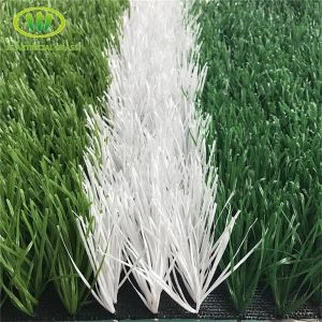
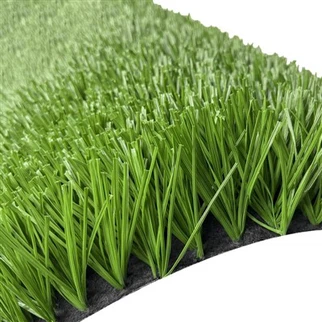
The artificial turf itself is the visible playing surface. Its yarn type, pile height, gauge, stitch density, backing construction and polymer quality all influence characteristics such as ball roll, player traction, resilience and wear resistance. However, even a high-quality turf product cannot compensate for a poorly prepared foundation. If the sub-base settles unevenly, drainage is inadequate, or seams are incorrectly installed, the performance of the finished field can deteriorate regardless of how advanced the turf looks on paper.
This is why FIFA's installation guidance treats the field as a complete construction project, covering basework, drainage, sub-base, synthetic surfacing and sports equipment. For B2B buyers, this is an important mindset shift: instead of asking only, "Which artificial grass should I buy?", the better question is, "Which complete turf system is appropriate for my project?"
5 Key Factors When Choosing the Best Soccer Turf System
Playing Frequency
A community field used occasionally has very different requirements from a professional training center operating multiple sessions every day. High-use facilities need a turf system with strong wear resistance, good fiber recovery and stable surface performance. FIFA notes that FIFA Quality-certified pitches are designed for recreational, training and grassroots applications and are tested for the demands of 40–60 hours of play per week. This is a useful benchmark for buyers, but it should not be interpreted as a universal lifespan or usage guarantee for every product. The actual system should always be selected according to the project's expected workload and applicable certification requirements.
Climate and Drainage
Rainfall, humidity, heat and seasonal weather can all affect the performance of a soccer field. A turf backing with good permeability is only one part of the equation; the base, drainage layer, slope and surrounding site conditions also need to work together. For projects in regions with heavy rainfall, poor drainage can quickly become a bigger problem than the turf itself. A well-designed system should therefore move water efficiently away from the playing surface while maintaining a stable and level foundation.
Player Safety and Shock Absorption
A good soccer surface should balance cushioning, traction, stability and responsiveness rather than simply being as soft as possible. Depending on the project requirements, a shock pad or elastic layer may be incorporated beneath the synthetic turf. The objective is to create a predictable playing surface that supports player movement while helping the field meet the required performance standards.
Durability and Maintenance
For B2B buyers, the initial turf quotation is only one part of the investment. Infill top-ups, brushing, cleaning, seam repairs and periodic maintenance can all affect the real cost of ownership. A cheaper turf system may look attractive at the purchasing stage but become less economical if it requires more frequent intervention or loses performance prematurely. The better approach is to consider total lifecycle cost and expected playing hours rather than comparing suppliers solely by price per square meter.
Testing and Compliance
Buyers should ask exactly what has been tested, under which standard, and whether the testing applies to the actual product and finished field. FIFA explains that its football turf certification process involves both laboratory testing of the product and testing of the final installation. This distinction is particularly important for project buyers because a certified turf product does not automatically mean that every installation using that product will achieve the same field-level certification.
Best Soccer Turf Systems for Different Projects
There is no single soccer turf system that is ideal for every project. A community field, school pitch, professional training center and commercial sports complex can have completely different requirements. For schools and community facilities, buyers often prioritize durability, easy maintenance and cost efficiency because the field may need to accommodate different age groups and activities. Training centers and soccer academies usually place greater emphasis on high-frequency use, fiber resilience, player traction and consistent ball behavior. For professional or competition-level facilities, the requirements become even more demanding, with greater attention paid to playing performance, safety, durability and certification.
FIFA's current Football Turf programme distinguishes between different quality levels, including FIFA Quality and FIFA Quality Pro, reflecting the different performance expectations of recreational, training and professional applications.
Why the Installation System Matters as Much as the Turf
Even a premium artificial turf product can underperform when it is installed on a poorly designed foundation. A professional soccer field normally involves several interconnected layers, including earthwork and base preparation, drainage, sub-base or elastic layers, synthetic surfacing and sports equipment. The purpose of these layers is not simply to support the grass; they determine whether the finished field remains level, drains efficiently and maintains consistent playing characteristics over years of use.
FIFA specifically identifies basework, drainage, sub-base, synthetic surfacing and sports equipment as key stages of football turf installation, while also emphasizing that proper basework is essential for the longevity and evenness of the finished field. For B2B buyers, this means a turf quotation should never be evaluated separately from the proposed installation structure.
Calculate the Real Cost of a Soccer Turf System
When comparing suppliers, the lowest price per square meter is rarely the complete financial picture. A project budget may include artificial turf, infill, shock pad, aggregate base, drainage, transportation, installation, sports equipment and future maintenance. The ongoing operating cost also matters. FIFA recommends that football turf projects consider not only initial capital expenditure but also running costs such as maintenance, staffing, utilities, supplies and future replacement or renovation.
A more useful purchasing approach is therefore to evaluate total cost of ownership and expected playing hours. In practical terms, a slightly more expensive system that provides stable performance, efficient maintenance and a longer usable life may offer better value than a low-cost system that requires frequent repairs or premature replacement.
Why Choose Linwoo for a Complete Soccer Turf System?
For international B2B buyers, sourcing the turf is only one part of the project. Linwoo approaches soccer field projects as a complete supply solution, combining artificial turf manufacturing with system customization, accessories and project support. Depending on project requirements, a complete solution can include soccer turf, shock pads, infill, seam tape, adhesive, drainage-related materials, fencing, goals, lighting, benches and scoreboards. This one-stop approach can simplify procurement for distributors, contractors and sports facility developers who would otherwise need to coordinate several suppliers.
Linwoo also supports OEM and ODM projects, allowing buyers to discuss specifications such as yarn structure, pile height, gauge, density, backing and project-specific performance requirements before production.
Overseas Installation Support Makes a Difference
For a large sports project, the quality of installation can be just as important as the quality of the materials. Incorrect seams, uneven turf installation, insufficient infill distribution or an unsuitable base can negatively affect the final playing surface. This is why an experienced supplier should be able to discuss the complete installation process rather than simply provide a product quotation.
Linwoo can support international customers with a broader project workflow, from turf selection and product supply to equipment coordination and overseas installation support. For B2B customers managing projects across borders, having one experienced partner involved in multiple stages can reduce communication gaps and make procurement and project coordination considerably easier.
A Practical Checklist for Soccer Turf Buyers
Before placing an order, professional buyers should ask more than "What is your price per square meter?" A useful supplier evaluation should cover the intended field type, expected weekly playing hours, turf pile height and gauge, yarn construction, stitch density, backing system, recommended infill, drainage requirements, shock-pad options, testing documentation, maintenance recommendations and expected service conditions.
It is also worth asking whether the supplier can provide installation guidance and supporting equipment. Most importantly, buyers should confirm whether any certification refers to the turf product itself or to the completed field installation. FIFA explains that its quality marks involve laboratory testing of the product as well as testing of the final installation, which makes the distinction particularly important when evaluating supplier claims.
The Best Soccer Turf System Is Project-Specific
Ultimately, the best soccer turf system is not necessarily the most expensive system, the tallest turf or the newest fiber technology. It is the system that matches the project's actual requirements. Playing intensity, climate, drainage conditions, player safety, field performance, maintenance resources and long-term budget should all be considered before selecting the turf specification.
For a community field, cost-effective durability may be the priority; for an academy, high-use performance may matter more; and for a professional facility, certification and advanced playing characteristics can become essential. Treating artificial grass as one component of a complete engineered system leads to better purchasing decisions and, more importantly, a better field for players.
Build Your Soccer Field with Linwoo
If you are sourcing artificial soccer turf for a new field, upgrading an existing facility or developing a sports project for your local market, Linwoo can help you evaluate the right system for your application. From artificial turf manufacturing and OEM/ODM customization to field accessories, complete soccer field equipment and overseas installation support, our goal is to make international B2B sourcing simpler and more reliable.
Tell us your field size, location, expected playing frequency and project requirements, and we can help you develop a soccer turf system suited to the project-not simply sell you a roll of grass.
FAQ
What is the best turf system for a soccer field?
The best system depends on field usage, climate, performance requirements, budget and maintenance capacity. A community pitch and a professional training facility should not necessarily use the same specification.
What pile height is best for soccer turf?
Pile height should be selected together with yarn structure, density, infill and the intended level of play. A taller pile is not automatically a better soccer surface.
Does soccer turf need infill?
Many football turf systems use infill to help stabilize the fibers and influence traction, cushioning and ball-surface interaction. The appropriate infill depends on the specific turf system and project requirements.
Does a soccer field need a shock pad?
Not every project requires the same shock-absorbing construction. The decision should be based on the turf system, base construction, performance targets and applicable testing requirements.
How long can a soccer turf system last?
Service life depends heavily on playing intensity, maintenance, climate, installation quality and product construction. A responsible supplier should discuss expected performance in relation to actual playing hours rather than promise a fixed lifespan for every project.
In the end, the smartest B2B purchase is not simply the cheapest turf-it is the right complete system for the field you are building.