Tennis courts can be divided into outdoor and indoor and have a variety of different golf course surfaces. There are usually four types, namely grass, hard, red clay and carpet.
The top three of the four types of tennis courts are more common, while the hard ground venues are the most common. The four major slam tennis tournaments use the first three venues, including the US Open (US Open Tennis) and the Australian Open (Australian Tennis). The Open is used in hard courts, while the US Open has a higher ball speed, which means higher quartz content and higher hardness. Wimbledon (Wimbledon) is a natural grassland that belongs to the fast course. The ball is high and fast, Federer belongs to the player who is good at natural grassland type; French Open (French Tennis Open) uses a clay court, which belongs to the slow course, the ball is low and slow, Nadal is " Red clay king."
Here are four kinds of tennis courts for grass, hard, red clay and carpet.
The grass tennis courts include natural grass tennis courts and artificial grass tennis courts.
The natural grass tennis court is one of the oldest and most traditional venues. The characteristics of the grass court are that the ball is slightly rubbed against the ground when the ball is landing, the ball rebounds fast, and the requirements for the player's reaction, sensitivity, running speed, running skills are very high, and the players also use this feature to play "offensive tennis". Various online tactics such as serving the Internet and surfing the Internet are almost regarded as the only magic weapon to win on the grass tennis court. The bottom line players often fail in the grass tennis courts. Because of its high quality and specifications for grass, and suitable grass seeds are not suitable for adaptability, combined with the climate restrictions and the need for extremely thoughtful and meticulous maintenance and maintenance, it is expensive, so this kind of course (especially It is difficult for the grass tennis courts used as regular games to be promoted all over the world. At present, the annual grass tennis professional tennis tournaments are almost all held on the British Isles, and the time is concentrated in June and July. The Wimbledon Championship is the oldest and most prestigious one.

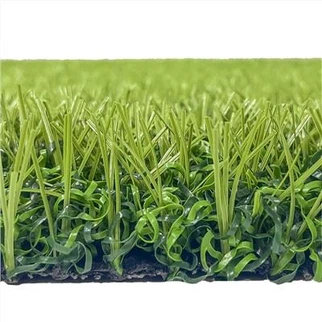
The artificial grass tennis court is a kind of imitation of natural grassland. Its structure is a bit like a carpet, but the bottom layer is a nylon braid. It is planted with bundles of nylon staple fibers. In order to maintain the uprightness of the fibers, the fine sand between the fibers As a filler. This kind of site requires a flat, sturdy base with a good drainage structure, and because the white line is directly assembled with the surrounding area, it eliminates the trouble of maintenance such as scribing. It has become a kind of all-weather venue, and the maintainers only need to comb them regularly and add the fine sand in between.
The hard tennis court is the most common kind of venue, and the silicone PU plastic venue is a kind of hard ground. Hard ground site It is generally made of cement and asphalt. It is coated with beautiful paint such as red and green or a layer of high-grade plastic surface. The surface is flat and high in hardness. The ball bounces very regularly but the ball rebounds. It is very fast, easy to clean and maintain, and basically does not require careful care. Many public tennis courts use this hard court.
It should be noted that the site is harder than other textures. The beginners should strengthen their protection when they practice the ball, especially the knees and ankles. Otherwise, the method of running and moving by beginners may not be correct. The reaction of the earth's surface is very strong and stiff, so it is easier to cause damage to some parts. The self-protection method is to keep the knee joint bent at all times so as to rely on the lifting and cushioning of the knee joint to offset the reaction force from the ground; the center of gravity falls on the forefoot to make the whole body more elastic; Also reduce the center of gravity as much as possible. Synthetic plastic field is also a kind of hard ground. The material of this kind of site is the same as that of plastic track and field track. It is based on reinforced concrete or other similar material structure. The surface is covered with synthetic plastic particles, with special glue in between. Sticky. The elasticity and hardness of this kind of site depend on the size of the plastic particles, the tightness of the spreading and its own characteristics. The plastic venues are bright and easy to manage, and can be laid both indoors and outdoors. It is also an ideal public stadium to choose from.
The clay tennis courts are “soft venues”. The venues are not common in China, and Chinese people generally know about them through the French Open. The clay court is the most typical representative of the “soft court”. In addition, various kinds of common sand, mud, and the like can be called soft sites.
This kind of venue is not very hard. The surface is covered with a layer of fine sand or brick powder. It is characterized by a large friction between the ball and the ground when the ball is landing. The ball speed is relatively slow. The player will be very active when running, especially in the emergency stop. The large sliding area, these determine that the player must have better will quality and better running and moving ability than other venues, otherwise it is difficult to win. Compared with the hard ground, the ball speed of the clay court is relatively slow, which is conducive to the play of the spinner on the bottom line. The characteristics of this kind of field are that the ball has a relatively large friction with the surface of the site, so the ball speed is slow, and there are many round-trips. This requires the player to have better physical strength, running and moving ability and more tenacious will than other venues. quality. Playing on this kind of field is a great test for the players, testing their efforts at the bottom line. Players generally have to pay several times the sweat and patience to deal with their opponents at the bottom line. The winners are often not frequent Internet users, but the hard-working side of the bottom line. It is worth mentioning that although the sand or land tennis courts are relatively low in cost, they are quite troublesome to maintain and maintain. Usually, they need to be watered, leveled, crossed, and swept. After the rain, it needs to be flat and rolled. ,and many more. Therefore, the players who play should be more protective of the venue and all facilities on the site.
There are two types of clay farms: red red clay and green red clay.
The red-colored clay court is paved with grated red bricks and rocks, and the surface is covered with more uniform granular red clay. This clay farm is very common in Europe and South America. Green red clay and red clay are somewhat similar. Below the ground is paved with a large amount of smectite; then the surface is covered with the same but the finest material. This type of clay court can be seen in the eastern and southern parts of the United States. We often say rubico refers to another kind of clay court.
The carpet site is a tennis carpet. As the name suggests, this is a "portable" roll-up tennis court. Its surface is a plastic surface layer, a nylon woven surface layer, etc., which is usually bonded with a certain strength and The hardness of asphalt, cement, concrete foundation can be on the ground, and some can even be directly spread or bonded to any supporting ground, which is convenient for transportation, suitable for transportation and has strong adaptability. Indoor Outdoors and even roofs can be used. The speed of the ball depends on the flatness of the surface of the site and the roughness of the carpet surface. This kind of site is also very simple to maintain, as long as the floor is clean, no damage, no water accumulation (for matching with the corresponding drainage facilities)