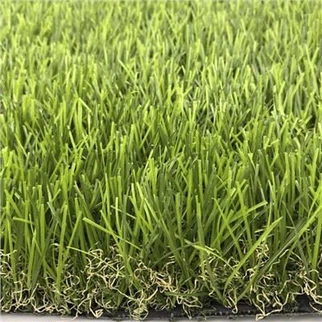
When decision-makers evaluate artificial turf for stadiums, municipal sports parks, public landscaping, or commercial complexes, the conversation often circles back to three key metrics: stitch rate, density, and pile height. These parameters, while seemingly technical, act as the backbone of performance and lifecycle value. Across the global B2B procurement chain, especially for projects measured in thousands of square meters, small adjustments in these figures can reshuffle installation budgets, cooling performance, and even long-term maintenance expectations.
Understanding Stitch Rate in High-Demand Environments
The stitch rate-the number of stitches per meter-shapes how tightly the turf fibers stand together. In large-scale football fields or multi-purpose complexes where footfall remains consistently high, a moderate-to-high stitch rate tends to stabilize the surface, preventing the turf from spreading or appearing thin after repetitive impact. In practice, project managers often observe that raising the stitch rate slightly not only improves the visual fullness of the field but also distributes pressure more evenly, reducing early wear. It's not simply about adding more stitches; it's about ensuring the backing can support that stitching tension without compromising flexibility. This synergy between stitch rate and backing strength is often what separates premium project-grade turf from consumer-grade alternatives.
Density as the Anchor of Durability and Visual Quality
Density, measured as turfs per square meter, plays a more multifaceted role than most new buyers expect. Higher density typically supports better resilience after compression, particularly in regions where heat and UV exposure accelerate fiber fatigue. In landscaping projects surrounding hotels, airports, or residential complexes, high-density turf maintains a more natural vertical orientation, meaning the grass does not collapse easily even when subjected to rolling luggage, maintenance carts, or daily pedestrian flow. Interestingly, certain regions with extreme climates-such as the Middle East-have shifted toward ultra-dense configurations because denser bases reduce the chance of premature infill displacement. For B2B buyers planning multi-site installations over several years, density becomes a cost-control variable that reduces surface rehabilitation frequency.
Pile Height and Its Influence on Functionality
Pile height tends to be the parameter that clients notice first because it directly influences the look and feel of the surface. Yet the functional implications stretch far deeper. In sports turf, pile height determines shock absorption, ball roll, player traction, and even the amount of infill required. Shorter piles in hockey or futsal fields reduce drag and create a faster playing environment, whereas taller piles in football fields help balance performance and player comfort. For landscape projects, the preferred height range shifts again. Developers of rooftop gardens or public courtyards often prefer mid-height piles, which provide softness while avoiding the maintenance burden of tall grass fibers. Because pile height influences visual depth, it is also a strategic aesthetic choice for commercial properties aiming for lush but low-effort greenery.
Bringing the Three Parameters Together in Large Projects
In practice, large-scale projects rarely judge these specifications individually. The real engineering value emerges when stitch rate, density, and pile height harmonize with expected usage patterns, climate, and maintenance strategies. A football stadium in North Africa may prioritize heat-resistant fibers and a slightly higher stitch rate to offset heavy UV exposure, while a 200,000 m² municipal landscaping project in Europe might focus more on density and mid-height piles to balance comfort and long-term shading behavior. Successful procurement teams look for proportionality: a very tall pile with low density looks uneven; a dense configuration with low stitch rate may feel rigid; an overly high stitch rate paired with short piles can push costs upward without noticeable benefit. The balancing act is both technical and economic.
Why These Metrics Matter for B2B Buyers
For global distributors, contractors, and facility operators, understanding the interaction between these three variables improves negotiation clarity and quality control. Manufacturers can easily tailor combinations, but project managers who understand these trade-offs are better positioned to establish performance benchmarks before production begins. Ultimately, stitch rate, density, and pile height form a quiet trio that determines installation value, lifecycle cost, and user experience. If a project aims for stable performance across years of constant impact or environmental exposure, these three specifications are the structural guarantees behind a reliable turf system.