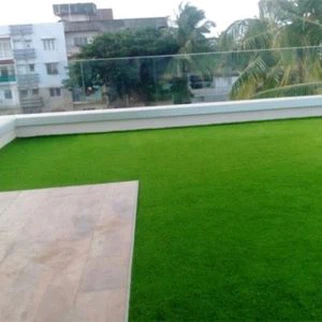
The production and processing of artificial grass involve several key steps to ensure high quality and durability. Here's an overview of the typical process:


1. Raw Material Selection
Polyethylene and Polypropylene: The primary materials used for the fibers in artificial grass are usually polyethylene (PE) and polypropylene (PP). These materials are chosen for their durability, UV resistance, and realistic appearance.
2. Extrusion
Fiber Creation: The selected raw materials are fed into an extruder, where they are melted and shaped into long strands or fibers. This process involves forcing the melted plastic through a die, which creates the desired thickness and shape of the fibers.
3. Cooling and Cutting
Cooling: The extruded fibers are cooled to solidify their shape. This is often done using air or water cooling methods.
Cutting: Once cooled, the fibers are cut to the required length, typically ranging from 1 to 2.5 inches, depending on the intended application.
4. Tufting
Tufting Machine: The cut fibers are then fed into a tufting machine, where they are stitched into a backing material. This backing is usually made of a durable fabric like polypropylene or latex, which provides stability and support for the grass.
Pattern Formation: During tufting, the fibers are inserted into the backing in a specific pattern, creating the desired density and texture of the grass.
5. Coating and Binding
Adhesive Application: After tufting, a layer of adhesive is applied to the backing to secure the fibers in place. This helps prevent the fibers from pulling out and ensures durability.
Secondary Backing: A secondary backing layer may be added for additional support and stability. This layer also aids in drainage.
6. Infill Application
Infill Material: In some types of artificial grass, infill materials such as rubber granules or silica sand are added to the surface. This helps to weigh down the grass, providing stability and a more realistic feel underfoot.
7. Quality Control
Inspection: Throughout the production process, quality control measures are implemented to ensure the grass meets industry standards. This includes checking for uniformity in color, fiber density, and durability.
8. Packaging and Distribution
Rolling and Packaging: Once the artificial grass has passed quality control, it is rolled up for easy transport and storage. It is then packaged and prepared for distribution to retailers or customers.
9. Installation Preparation
Installation Guidelines: Along with the product, installation guidelines and recommendations are often provided to ensure proper laying and maintenance of the artificial grass.
The production and processing of artificial grass involve a series of well-coordinated steps, from raw material selection to the final product. Each stage is crucial in ensuring that the artificial grass meets aesthetic, functional, and durability standards, making it suitable for a variety of applications, including sports fields, residential gardens, and commercial landscapes.