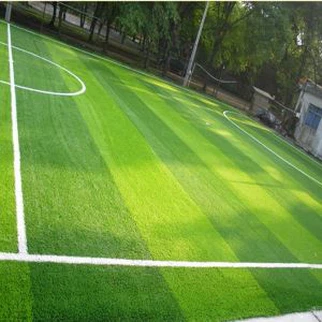
Since the introduction of artificial turf in China in 1999, its development rate has been increasing several times every year. More and more it has been used and promoted by colleges, universities, colleges and professional competitions, replacing a large number of sports venues originally planted with natural turf.

At present, various fields have mixed opinions on artificial turf, and the "vegetable field" problem of natural grass fields has also troubled people in the industry for a long time, so real and fake mixed grass has appeared in the industry, hoping to combine the advantages of two types of sites, but a Wuhan home The Chinese Super League pushed true and false mixed grass to the cusp.
In fact, after many years of improvement, the artificial turf has been comprehensively improved in terms of various performances. How much difference will there be between the artificial turf and the natural turf? The following will compare the three major aspects of sports performance, environmental protection performance, and cost.
Sport performance comparison
Natural lawn:
Excellent sports performance and less damage to players' bodies
Low frequency of use, violent actions such as tackles are likely to cause potholes on the ground
artificial turf:
Sports performance is close to that of natural grass, and it excels in professional tests such as ball rolling, vertical deformation, impact absorption, ball rebound, and turning torque
Artificial grass field can be used at high frequency
Can provide sufficient cushioning force to reduce the damage that may be caused by the generally hard ground on the foot, and effectively reduce the sports injuries of athletes
Compared with natural grass, the player has greater abrasions to the body when falling