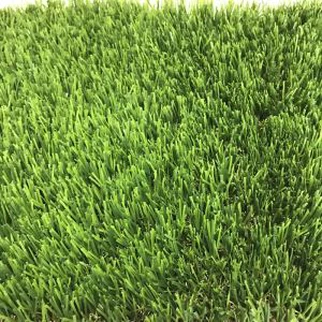
When we talk about artificial grass for high-traffic commercial areas-shopping malls, airport lounges, outdoor event plazas-the conversation often focuses on pile height, density, or fiber type. Yet in my two decades in the industry, I've seen more projects succeed or fail based on the backing structure than on any other specification. The backing is the "spine" of the turf, the layer that determines its dimensional stability, drainage capacity, tuft bind strength, and long-term performance under relentless footfall. Choosing the wrong backing can mean wrinkles, poor drainage, or fiber loss within a year, turning an investment into a liability.
Understanding the Role of the Backing
The backing of artificial turf generally consists of primary layers-often polypropylene (PP) cloth and sometimes reinforced mesh-followed by a secondary coating, typically SBR latex or polyurethane. For high-traffic areas, the goal is a structure that combines tensile strength, tuft retention, and flexibility. I remember a project in a busy European train station plaza where the design team initially selected a single-layer PP backing with a thin latex coat to cut costs. Within six months, areas along the main walking paths began to show tuft loosening. We had to replace 40% of the surface ahead of schedule. Since then, I advise clients that saving 5% upfront on backing materials can easily cost 50% more in premature replacement.
Key Considerations: Strength, Drainage, and Climate
For heavy foot traffic, the ideal configuration is a three-layer primary backing (PP cloth + woven mesh + additional PP cloth) combined with a robust SBR latex coating of at least 900–1200g/m². This structure provides both horizontal and vertical stability, ensuring fibers remain anchored despite constant use. Drainage is equally important: commercial sites often require high-density perforations-up to 60–80 holes per square meter-to allow quick water runoff. In tropical or monsoon-prone climates, insufficient drainage can lead to water pooling, mold growth, or surface slipperiness, creating safety hazards. One of my clients in Southeast Asia learned this the hard way when a rooftop garden installation without adequate drainage became unusable after every heavy rain.
Balancing Durability with Flexibility
It's a common misconception that the stiffer the backing, the better it will perform. While stiffness can help in flat installations, overly rigid backings are prone to cracking in cold weather or on uneven substrates. A good commercial-grade backing needs a balance: strong enough to keep tuft bind above 30 Newtons, yet flexible enough to conform to slight surface variations. I recall a municipal playground in Canada where a well-reinforced latex-backed turf survived ten winters without significant cracking because its designers prioritized elasticity alongside strength.
Testing Before Committing
Whenever possible, I recommend conducting a site-specific trial. For one international hotel chain, we installed a 20 m² sample area using three different backing structures. We then monitored tuft retention, drainage rate, and surface stability over three months of real guest traffic. The data from that trial not only justified selecting the most expensive option but also gave the client peace of mind knowing the turf could withstand the wear-and-tear of luggage wheels, high heels, and tropical downpours.
Conclusion: Backing Is Not the Place to Cut Corners
In the world of artificial turf, especially for high-traffic commercial zones, the backing is your insurance policy. Investing in a robust, well-engineered structure might add a few dollars per square meter, but it can extend the surface's lifespan by years and maintain its visual appeal under the most demanding conditions. My advice to every commercial buyer: always request technical specs for tensile strength, tuft bind, and drainage rate, insist on seeing physical samples, and whenever possible, test them in real-life conditions before signing off on a large order. The right backing structure is not just part of the turf-it's the foundation of your project's success.