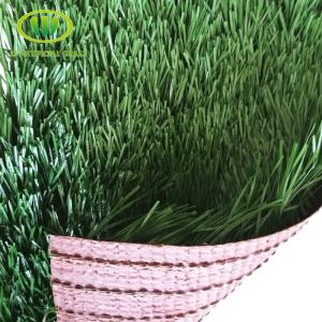
In the highly sophisticated sport of golf, the quality of the training ground often determines the effectiveness of the swing. More and more professional players and coaches choose to use synthetic turf for daily training. This trend is not only because of the simple maintenance, but also because it is a leap forward in restoring the feel of the real golf course. Take the JS Golf series we recently customized for a California golf academy as an example.Since adopting this turf, student satisfaction has risen significantly, and even attracted more young students to sign up for driving range courses.

Consistency Matters
Unpredictable fairway bounce is one of the biggest concerns for professional golfers. Natural grass is affected by factors such as weather, humidity, and pests, and each shot may be slightly different. High-quality artificial turf can bring consistent ball speed and rolling direction through precise control of grass height, density and backing elasticity. Take the feedback of PGA certified coach Brian W., who said that since using the green area of synthetic grass, "my putting practice stability has increased by 20%, especially before preparing for the game. I can quickly get into the state."
Weatherproof and Always Ready
Natural grass is almost unusable after rain, and it is easy to be yellow and uneven in the dry season. But artificial grass doesn't have this problem. It has excellent drainage and can be restored to use in a short time even after a heavy rain. It stays lush and green year-round, requiring no mowing or irrigation. According to the data of the Synthetic Turf Council, synthetic turf can save about 50,000 gallons of water each year (https://www.syntheticturfcouncil.org), which is especially important for golf users who have a high training frequency and a large demand for venues. A Nordic customer of JS once said in an email that after installing artificial grass on their outdoor greens, they not only reduced maintenance time, but also remained usable through seven months of snowy and icy conditions.
Surface Customization
A professional player cannot always train on the same type of fairway. High-quality artificial grass supports customized grass parameters according to green speed, thickness of long grass area or undulation design, simulating venues in different countries or event types. This is crucial for preparing for the game. We once customized a higher friction and thicker grass chipping area for a player preparing to play in the British Open to help him adapt to the high wind, humidity and cold venue conditions in advance.
Maintenance and Cost Efficiency
From an operational perspective, golf academies, coaching centers, and home greens are gradually turning to artificial grass, also for maintenance and cost considerations. Natural grass requires a professional team to regularly fertilize, mow, and replant, while artificial grass only requires occasional cleaning of fallen leaves and almost no additional maintenance. According to a report by HomeAdvisor, the annual maintenance cost of a natural grass green can reach $4,000-$6,000, while the initial investment of artificial greens is high, but typically pays for itself within five years, and there is almost no additional expenditure for a use cycle of more than 10 years.
A Better Training Mindset
A good venue not only improves skills, but also improves mentality. Many students practice on imperfect lawns for a long time, and often form misjudgments about "mistakes". Artificial grass provides standard and consistent practice feedback, which can help students build a more confident hitting rhythm. The head of an indoor golf training institution we cooperated with once said: "The improvement of players' psychological quality in training often starts with a lawn that will not 'hold them back'."
Conclusion: Not just a substitute, but also an evolution
Synthetic turf for golf practice, such as our JS Golf series, is no longer just a substitute, but a part of professional training. Whether it is a home green, a teaching center or a professional pre-match warm-up area, artificial grass is changing the way golf is trained with its stability, realistic feel and operational advantages. For players who really focus on feel and efficiency, it is not only a tool, but also an important partner for daily improvement.